New coal projects funded by global banks to cause long-term global impact
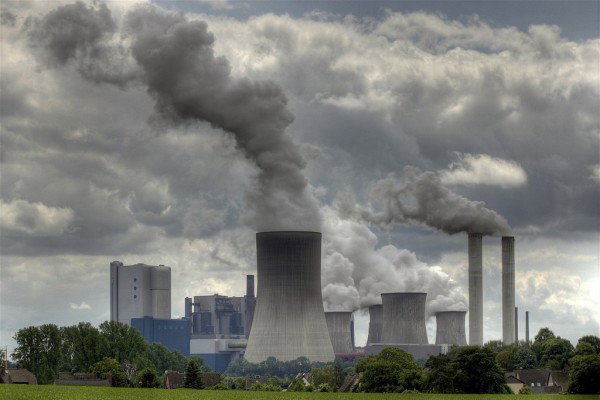
Recent research indicates that global power generation must rapidly decarbonize by 2050 to stabilize global warming below 2⁰C by 2100. However, the investments that multilateral banks such as the Industrial and Commercial Bank of China, Bank of China and China CITIC bank continue to make today will make it hard for us to meet these goals.
The three are among the world's 60 largest commercial and investment banks currently funding projects on fossil fuels and continue to lead the financing of coal power.
In fact, according to a recent report (Fossil fuel finance report 2021), the banks have poured a total of $39 billion into 30 biggest coal power companies but lack policies to proactively restrict support to these projects that continue to accelerate the climate crisis.
For instance, the EMBA Hunutlu, a 1,320-megawatt coal power plant located in Iskenderun Bay, Turkey, is under construction and is expected to contribute to air pollution greatly.
The project, which is partly funded by ICBC, China Development Bank and Bank of China, is expected to emit more than 200 million tons of CO2 during its projected lifespan. Studies estimate that its operations will contribute to 2000 deaths over its 40-year lifetime.
The next project is that of Jawa 9 and 10. The 2000 megawatt project is to be constructed in Indonesia’s Banten province, an area that is already experiencing horrendous air pollution due to the existing coal plants. Reports have highlighted how the local population is contracting respiratory and skin diseases from the coal plants. Jawa plant is likely to accelerate the health crisis.
Due to such harmful climate impacts, banks need to cut emissions immediately. They need to acknowledge that they are major emitters too and zero their financed emissions by 2050 latest.
They need to immediately end support for fossil expansion and commit to the date by which their fossil financing will reach zero, as was detailed in the 2019 UN Climate Summit in New York City.
Although there are a few banking sectors that have adopted best practice coal power policies, such as cutting off funding for all companies developing new coal plants, these three biggest funders are yet to adopt these restrictions.
In 2020, more than 20 NGOs urged the Chinese banks behind these projects to withdraw, but they failed. And as statistics would have it, we are still long further from any grace periods, and they should withdraw financing now with 2030 a medium checkpoint.
Banks financed emissions must decline from 2021 onwards, and they must commit to at least halving their financed by 2030 at the latest. Why? Because the potential emissions from both coals, oil and gas already in production would push us far beyond 1.5ºc and likely to even 2ºc if we do not act immediately.
In fact, any expansion of fossil exploration or extraction, or expansion of infrastructure that drives continued and expanded extraction, is incompatible with the Paris Agreement. Therefore, for us to limit global warming, there is a need for a rapid, managed phase-out of existing fuel use production, and this should begin with banks excluding financing for all coal companies.
This article was originally published on Grace Akinyi's LinkedIn page
